Os habéis preguntado nunca ¿Cómo consigue la Estación Espacial no quedarse nunca sin oxígeno?
A cientos de kilómetros de la Tierra, los astronautas viven en un entorno completamente cerrado, donde cada litro de agua y cada bocanada de aire resultan esenciales. Llevar continuamente oxígeno desde nuestro planeta sería demasiado caro y poco práctico.
Por eso, la Estación Espacial Internacional utiliza complejos sistemas capaces de reciclar el aire, eliminar el dióxido de carbono y producir oxígeno separando las moléculas del agua mediante electricidad.
En este vídeo de TED-Ed, Álvaro Romero-Calvo y Theo St Francis explican cómo funciona este circuito casi cerrado que permite respirar a la tripulación durante meses en el espacio.
How does the space station never run out of oxygen? - Alvaro Romero-Calvo and Theo St Francis
Explore the incredible systems that create breathable air in space, and how we can adapt that process for future expeditions.
--
For over 25 years, the International Space Station’s air supply systems have revolutionized space missions. Yet the need for regular maintenance, repairs, and upgrades has pushed engineers to develop even more reliable systems for future spacecraft. How do we create breathable air in space? And what does that look like for longer expeditions? Alvaro Romero-Calvo and Theo St Francis investigate.
Lesson by Alvaro Romero-Calvo and Theo St Francis, directed by Lazy Chief.
Support Our Non-Profit Mission
----------------------------------------------
Support us on Patreon: http://bit.ly/TEDEdPatreon
Check out our merch: http://bit.ly/TEDEDShop
----------------------------------------------
En el post de hoy os invito a ver la conferencia TED titulada "SpaceX's supersized Starship rocket -- and the future of galactic exploration" , es decir "El cohete Starship sobredimensionado de SpaceX y el futuro de la exploración galáctica" , que realizó la científica planetaria Jennifer Heldmann.
SpaceX's Supersized Starship Rocket and the Future of Galactic Exploration | Jennifer Heldmann | TED
En esta charla TED, Jennifer Heldmann explora cómo el cohete Starship de SpaceX, con su diseño reutilizable y gran capacidad de carga, podría revolucionar la exploración espacial. Destaca el potencial de Starship para facilitar misiones humanas sostenibles a la Luna y Marte, así como para lanzar telescopios más grandes que permitan observar más profundamente el universo. Además, aborda la posibilidad de explorar mundos oceánicos dentro de nuestro sistema solar, como Europa y Encélado, ampliando así nuestras fronteras científicas y tecnológicas.
Jennifer Heldmann es una destacada científica del Centro de Investigación Ames de la NASA, especializada en la exploración de la Luna y Marte. Ha participado en misiones clave como LCROSS y VIPER, y ha contribuido significativamente a la planificación de futuras misiones humanas en el marco del programa Artemis. Su experiencia combina la investigación científica con la planificación estratégica de misiones espaciales, lo que le permite ofrecer una visión integral sobre el futuro de la exploración galáctica.
Esta charla es especialmente interesante porque ofrece una perspectiva experta sobre cómo las nuevas tecnologías, como el cohete Starship, pueden abrir nuevas posibilidades para la humanidad en el espacio. Heldmann presenta de manera clara y accesible los desafíos y oportunidades que implica expandir nuestra presencia más allá de la Tierra, inspirando a la audiencia a imaginar un futuro donde la exploración galáctica sea una realidad tangible.
Momentos clave de la tecnología de los últimos 60 años (by McKinsey)
Este es el séptimo y capítulo de una serie de posts que repasan la infografía realizada por McKinsey sobre los últimos 60 años en cuanto a momentos clave en el negocio tecnológico.
Vía Mixx.io os muestro a continuación un vídeo que presenta un prototipo desarrollado por la NASA y Boeing de avión con alas de entramado reforzado, y con una forma de alas que recuerdan a las naves espaciales de las películas. Pues bien este concepto pasará a fabricarse en 2 prototipos funcionales a tamaño real que constarán co alas más largas ligeras y finas que las actuales:
Transonic Truss-Braced Wing: Wind Tunnels Enabling the Next Gen of Transport Aircraft Technology
(by NASA)
Vídeo de NASA y Boeing presentan: aviones con alas reforzadas y vigas transónicas
NASA’s Aerosciences Evaluation and Test Capabilities Portfolio (AETC) is helping to enable the next generation of transport aircraft technology with testing of the Transonic Truss-Braced Wing. Testing has been conducted in three of NASA’s wind tunnel facilities so far and includes assessing take off and landing configurations, ground effects and aerodynamic characteristics.
The Mandalorian: After the stories of Jango and Boba Fett, another warrior emerges in the Star Wars universe. “The Mandalorian” is set after the fall of the Empire and before the emergence of the First Order. We follow the travails of a lone gunfighter in the outer reaches of the galaxy, far from the authority of the New Republic.
La novena entrega de la serie está protagonizada por un increible test que tuvo lugar hace unos meses de SpaceX Falcon Heavy Test Flight
Falcon Heavy Test Flight (by SpaceX)
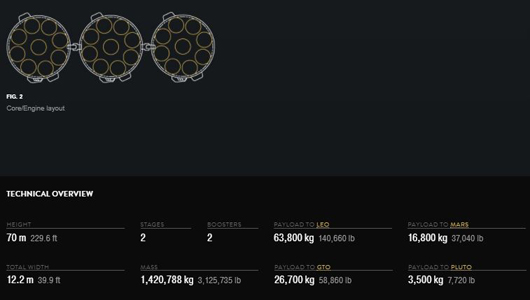
Following its first test launch, Falcon Heavy is now the most powerful operational rocket in the world by a factor of two. With the ability to lift into orbit nearly 64 metric tons (141,000 lb)---a mass greater than a 737 jetliner loaded with passengers, crew, luggage and fuel--Falcon Heavy can lift more than twice the payload of the next closest operational vehicle, the Delta IV Heavy, at one-third the cost. Falcon Heavy draws upon the proven heritage and reliability of Falcon 9.
Its first stage is composed of three Falcon 9 nine-engine cores whose 27 Merlin engines together generate more than 5 million pounds of thrust at liftoff, equal to approximately eighteen 747 aircraft. Only the Saturn V moon rocket, last flown in 1973, delivered more payload to orbit. Falcon Heavy was designed from the outset to carry humans into space and restores the possibility of flying missions with crew to the Moon or Mars.
En este octavo capítulo veremos una animación de lo que es el proyecto del cohete SpaceX Falcon Heavy:
Falcon Heavy Animation (by SpaceX
When Falcon Heavy lifts off, it will be the most powerful operational rocket in the world by a factor of two. With the ability to lift into orbit nearly 64 metric tons (141,000 lb)---a mass greater than a 737 jetliner loaded with passengers, crew, luggage and fuel--Falcon Heavy can lift more than twice the payload of the next closest operational vehicle, the Delta IV Heavy, at one-third the cost.
Falcon Heavy's first stage is composed of three Falcon 9 nine-engine cores whose 27 Merlin engines together generate more than 5 million pounds of thrust at liftoff, equal to approximately eighteen 747 aircraft.
Following liftoff, the two side boosters separate from the center core and return to landing sites for future reuse. The center core, traveling further and faster than the side boosters, also returns for reuse, but lands on a drone ship located in the Atlantic Ocean.
At max velocity the Roadster will travel 11 km/s (7mi/s) and travel 400 million km (250 million mi) from Earth.
El séptimo post sobre SpaceX está dedicado al más potente de todos los cohetes del mundo, el SpaceX Falcon Heavy
SpaceX Falcon Heavy The Worl's most Powerful Rocket
A continuación las partes del Space X Falcon Heavy:
Según la siguiente comparativa, el SpaceX Falcon Heavy es el cohete más potente del mundo con una carga que puede llegar hasta los 63.800Kg, por encima del Space Shuttle, el Proton M, el Delta IV Heavy, el Titaln IV-B, el Ariane S ES, el Atlas V551, el Japan H28 y el China LM38
En la web se pueden seguir los hitos que va consiguiendo el proyecto de Space X con Falcon Heavy
A continuación un interesante vídeo del primer test del Falcon 9 Reusable o SpaceX F9R
F9R First Flight Test | 250m (by SpaceX)
Video of Falcon 9 Reusable (F9R) taking its first test flight at our rocket development facility. F9R lifts off from a launch mount to a height of approximately 250m, hovers and then returns for landing just next to the launch stand. Early flights of F9R will take off with legs fixed in the down position. However, we will soon be transitioning to liftoff with legs stowed against the side of the rocket and then extending them just before landing.
The F9R testing program is the next step towards reusability following completion of the Grasshopper program last year (Grasshopper can be seen in the background of this video). Future testing, including that in New Mexico, will be conducted using the first stage of a F9R as shown here, which is essentially a Falcon 9 v1.1 first stage with legs. F9R test flights in New Mexico will allow us to test at higher altitudes than we are permitted for at our test site in Texas, to do more with unpowered guidance and to prove out landing cases that are more-flight like.
El tercer capítulo sobre Space X se presenta en forma de un vídeo de introducción sobre lo que es BFR: Big Fucking Rocket or Big Falcon Rocket...
BFR Overview (by Space X)
On September 29th, 2017, SpaceX CEO and Lead Designer Elon Musk presented an updated vehicle design for what’s currently being referred to as BFR. A key challenge with the original vehicle design was figuring out how to pay for it. The updated design solves this problem by leveraging a slightly smaller vehicle that can service all greater Earth orbit needs as well as the Moon and Mars. This single system—one booster and one ship—will eventually replace Falcon 9, Falcon Heavy and Dragon. By creating a single system that can service a variety of markets, SpaceX can redirect resources from Falcon 9, Falcon Heavy and Dragon to the BFR system—which is fundamental in making BFR affordable.
En este segundo post sobre Space X os invito a ver una interesante presentación de Elon Musk en el marco del congreso International Astronautical Congress (IAC) en Adelaida (Australia).
Making Life Multiplanetary (by SpaceX)
On September 29th at the International Astronautical Congress (IAC) in Adelaide, Australia, SpaceX CEO and Lead Designer Elon Musk provided an update to his 2016 presentation regarding the long-term technical challenges that need to be solved to support the creation of a permanent, self-sustaining human presence on Mars.
A continuación voy a recoger en una serie de artículos los diferentes proyectos en los que se ha embarcado Elon Musk y su empresa SpaceX.
Space X Mars Making life multiplanetary
“You want to wake up in the morning and think the future is going to be great - and that's what being a spacefaring civilization is all about. It's about believing in the future and thinking that the future will be better than the past. And I can't think of anything more exciting than going out there and being among the stars.”
En sucesivos vídeos vamos a ver la presentación de Elan Musk "Making a Multiplanet Species"
En el post de hoy muestro un interesante timelapse o hyperlapse de JF1LMS titulado: Winter Time - A Hyperlapse Film
Winter Time - A Hyperlapse Film (by JF1LMS)
My first serious time-lapse project. Shots were taken in a small Slovak village where I grow up.
I like nature in all seasons, but especially in winter, when everything is under white blanket. And Winter in 2017 was extraordinary cold, therefore I decided to capture this beauty, when it was possible every day and night in January and February.
Some shots were taken in -20 °C and my fingers and toes almost froze up, particularly in some long hyperlapse scenes, when was no time for break 3 or 4 hours. It was extremely hard work and exhausting for me. I didn't have such experience before, but it was quite challenge and motivation.
I wanted capture that magic moment with night sky hyperlapse in middle of the night when people sleep, which was my primarely goal to achieve. I know that movement of the stars and stabilization in some shots is far from perfect, but at least, I've tried it and I'm happy to share my frosty piece with you.
Everything was done manually without motorized parts, sliders or heads.
Se trata de una tradición que empezó en 1825 el gran Michael Faraday en la The Royal Institution Christmas Lectures for Children del RIGB.
Esta segunda entrega se titula "El Sistema Solar exterior y la vida" - The Outer Solar System and Life.
Carl Sagan: Christmas lectures 2 - The Outer Solar System and Life
1977 Carl Sagan Christmas Lectures 2, about the outer solar system and life.
In his second Christmas Lecture, Carl Sagan travels beyond Earth to explore the possibility of life in outer space.
To find the answer, he looks back to the early stages of the development of our atmosphere. The hydrogen from this atmosphere has since escaped to space from Earth, but not from bigger planets like Jupiter. When the hydrogen-rich gases of the early Earth are mixed together and supplied with energy, the essential molecular building blocks of the proteins and nucleic acids are formed.
As Sagan suggests, although this process no longer occurs on Earth, such organic chemistry should be occurring in the outer solar system on Jupiter, and Titan, Saturn's largest moon. The NASA twin spacecraft Voyager 1 and 2, launched a few months prior to these Lectures in 1977, were sent to space to explore this hypothesis.
Este domingo os muestro el vídeo Low Earth Orbit de Visual Suspect filmado en la isla griega de Folegandros:
Low Earth Orbit
Orbital drone movements are the ones with power to convert two dimensional images into dancing focal layers escaping out of the frame. We wanted to further explore the technique, with high altitude long orbits, along with ones very close to the ground, we call them "Orbital drone-lapses". These shots are a mix of automatic and manual flights.
Low Earth Orbit is a zone between earth's surface and 2,000km, where we find most of our satellite system orbiting around our planet, together with the international space station.
A romantic attempt to step aside for a while gravity and atmospheric forces, bringing these orbits closer to the ground.